


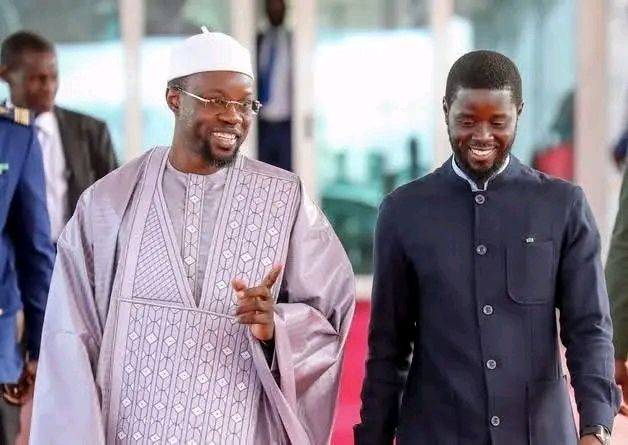
Senegal has plunged deeper into political uncertainty after President Bassirou Diomaye Faye dismissed Prime Minister Ousmane Sonko and dissolved the government following months of mounting tensions between the two former allies.
The dismissal , announced Friday night on state television, marks the biggest political rupture since the ruling Pastef coalition swept to power in 2024 on promises of reform, anti-corruption, and economic recovery.
In a decree read by presidential aide Oumar Samba Ba, President Faye formally relieved Sonko and all government ministers of their duties.No successor has yet been named, leaving the West African nation in suspense as observers watch for the next move from the presidency.
Shortly after his dismissal, Sonko sent a defiant tone on social media, saying he would finally “sleep peacefully” at his residence in Dakar’s Keur Gorgui district. The former premier later returned home to a hero’s welcome as hundreds of loyal supporters flooded the neighborhood chanting slogans and cheering his arrival.
The political divorce between the president and his mentor had been brewing behind the scenes for months. While Sonko remained the face of the ruling movement and retained a backing among young voters, constitutional authority ultimately rested with President Faye, who exercised his executive powers with a single decree.
Cracks in the alliance widened publicly earlier this month when Faye openly criticized what he described as excessive personalization within the ruling party — remarks widely interpreted as a direct swipe at Sonko’s growing influence.
Sonko, in turn, accused the president of weak leadership and failing to defend him against mounting criticism from political opponents and foreign partners.
The dismissal also came amid a controversy surrounding Senegal’s newly adopted legislation increasing penalties for same-sex relations. Hours before his removal, Sonko lashed out at Western governments, especially France, accusing them of attempting to impose foreign social values on Senegal.
His remarks reignited his trademark pan-Africanist rhetoric that helped galvanize frustrated young voters during the 2024 presidential race.
Behind the political drama lies a worsening economic storm. Since taking office, the administration has struggled to contain a crushing debt burden inherited from the previous government. According to the IMF, Senegal’s debt has climbed to roughly 132 percent of GDP, making it one of sub-Saharan Africa’s most indebted economies.
Ironically, Sonko’s dismissal comes only weeks after parliament approved electoral reforms that could clear the way for him to contest the 2029 presidential election by removing restrictions linked to his earlier defamation conviction.
For now, the political honeymoon that brought Faye and Sonko to power appears firmly over, opening a new chapter in Senegal’s turbulent power struggle.

