


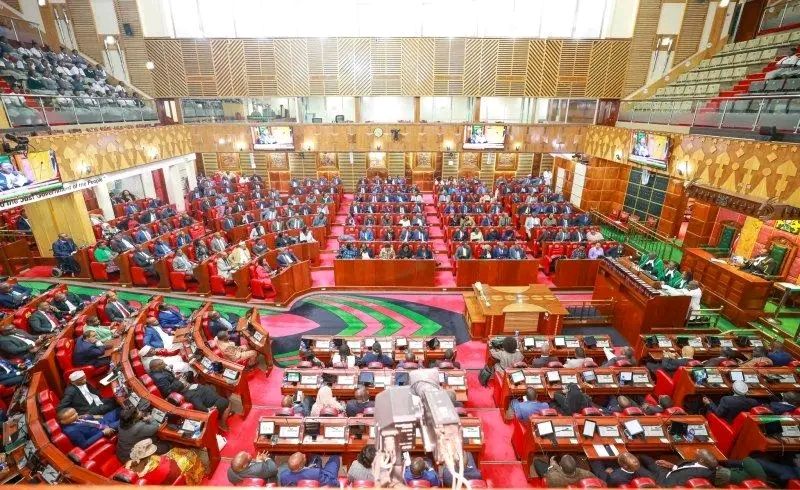
 Following the third reading vote in Kenya it was discovered that 187 MPs stayed away as Parliament came together to complete the final vote on the Finance Bill, 2026.
Only 162 of the 349 members in the National Assembly took part in the Third Reading vote, a turnout that left people wondering the cause of it.
Of those present, 122 supported the Bill and 40 opposed it, giving proponents a clear majority among voters in the chamber.
With the Bill approved, it will now be sent to President William Ruto for signature to become law.
Supporters from the government and allied groups provided the votes, making up roughly three-quarters of those who cast ballots.
Because fewer than half of all MPs participated, 187 members — 53.6 percent of the House — were recorded as absent or otherwise not voting during a high-stakes parliamentary session.
Parliament adopted committee amendments that removed several disputed tax measures, something that lowered the extra revenue the government expected to raise for the 2026/27 budget.
Those revisions trim some of the anticipated Sh120 billion in new collections intended to help finance the Sh4.8 trillion national budget.
Observers link the scaled-back revenue ambitions to lessons from the Finance Bill, 2024, when proposed tax changes triggered intense public backlash and setbacks for supporters.
Opposition attempts to force a recorded division — which would have identified how each lawmaker voted — did not succeed, denying voters a roll-call record of their MPs’ positions.
Earlier stages of the Bill’s passage also lacked individual voting records: the Second Reading advanced by acclamation rather than a formal roll call.
On social media, many citizens accused absentees of effectively casting tacit support for the Bill by avoiding a recorded vote, arguing that such behavior shields representatives from public scrutiny.
Some commenters urged reducing the number of MPs, saying the large assembly adds cost without clearer accountability, while others questioned whether a minority can fairly decide matters that affect millions of taxpayers.
The debate recalls the 2024 episode when MPs who backed contentious tax measures were targeted publicly, including attacks on property and businesses, a factor some say may have influenced lawmakers’ reluctance to vote openly.
For citizens demanding clarity, a recorded vote would provide a definitive public ledger of how each MP handled a decision with direct consequences for household taxes and national spending.