


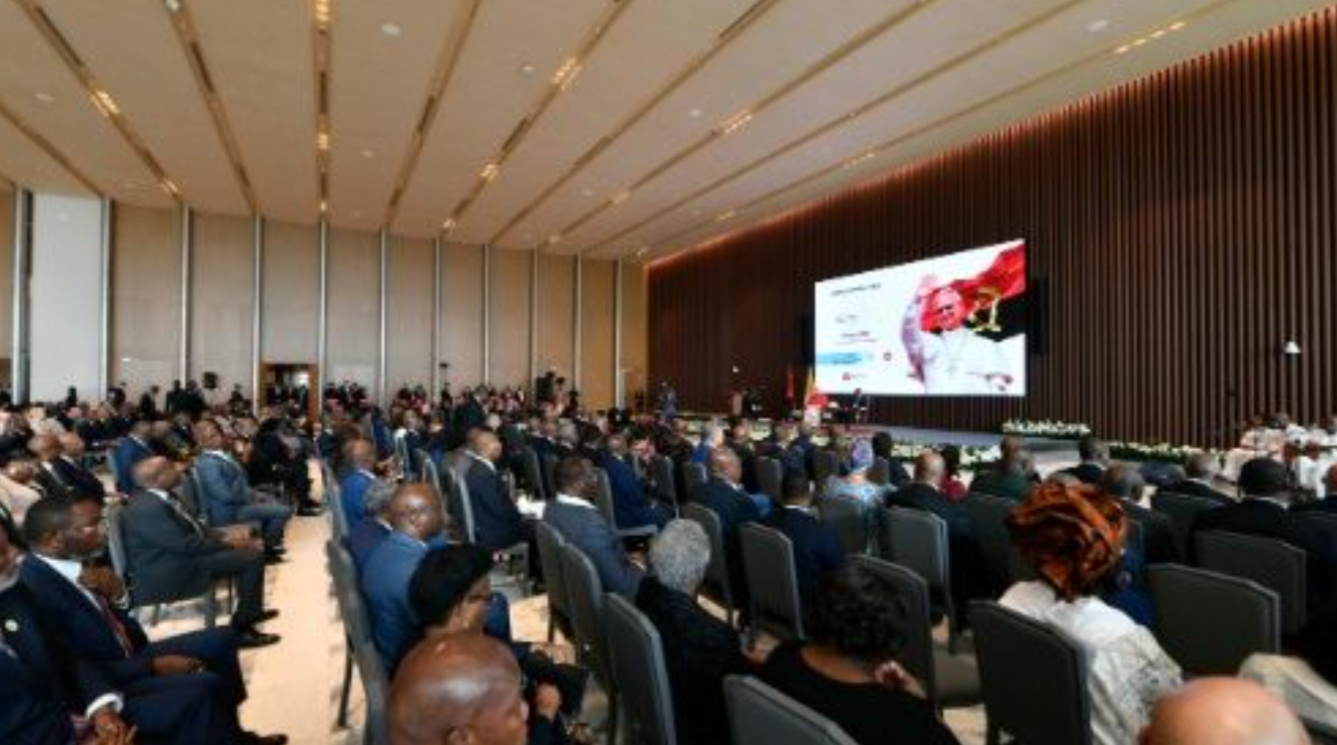
 In Luanda, Pope Leo XIV met Angolan authorities and diplomats at the Presidential Palace on Saturday, delivering a message focused on solidarity, justice, and hope for Africa’s future.
During his first official engagement in Angola, held at the Presidential Palace in Luanda, Pope Leo XIV addressed President João Lourenço, government officials, civil society, and diplomats, thanking them for the invitation and describing his visit as a spiritual journey to a land he said is loved by God.
He expressed sympathy over recent flooding in Benguela province, offering prayers for victims and solidarity with families who lost their homes, while praising the national response and unity shown through widespread support for those affected.
The Pope highlighted the strength of the Angolan people, stressing that their greatest wealth is not material but human, pointing to a deep resilience and a lasting joy that, in his words, survives even the harshest difficulties.
He warned against continued economic exploitation of African regions, criticizing systems that treat people and resources as commodities, and calling for an end to what he described as a cycle of extractive interests.
Expanding his message to the continent, he described Africa as a “reserve of joy and hope,” especially due to its young population, who continue to dream and resist resignation despite challenges.
He also condemned economic models that generate suffering, inequality, and environmental damage, arguing that such systems exclude rather than include and are increasingly outdated.
Citing Saint Paul VI, he rejected materialistic and consumer-driven societies as unsuitable for the future, insisting that younger generations are demanding a different path.
On governance and peace, he stressed the importance of dialogue, stating that meaningful social life begins with encounter and conversation, even amid disagreement and conflict.
He urged leaders to transform conflict into cooperation, quoting Pope Francis on the need to resolve tensions constructively and promote peace as a shared responsibility.
Addressing Angolan leaders directly, he called for inclusive governance, advising them not to suppress differing voices and to always prioritize the common good over private interests.
The Pope also warned against political manipulation based on fear and division, saying such tactics weaken unity and fuel polarization.
He concluded by encouraging “true joy” as a social force rooted in dignity, mutual respect, and faith, stating that without joy, renewal and justice cannot exist.
Closing his message, he expressed confidence in Angola’s future, reaffirmed the Catholic Church’s commitment to social development, and ended with a blessing for the nation, saying: “God bless Angola.”

