


MIDDLE EAST IN FLAMES
How a joint American and Israeli assault on Tehran shook the Islamic Republic to its foundations and sent tremors rippling across the entire globe
The Day the Axis Broke
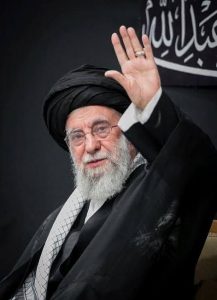
Shortly before ten o’clock on the morning of Saturday the 28th of February 2026, the Iranian capital awoke not to the familiar cacophony of a bustling metropolis but to something altogether more terrifying: the concussive thunder of missiles, the shriek of fighter jets overhead, and the billowing columns of thick black smoke that rose above the skyline of Tehran like funeral pyres for a civilisation on the precipice of irreversible transformation.
By nightfall, Ayatollah Ali Khamenei, Supreme Leader of the Islamic Republic of Iran for thirty-seven years, the most consequential and enduring theocratic autocrat of the modern age, was dead. He was eighty-six years old. His compound in the Pasteur district of central Tehran, where the presidential palace and the National Security Council likewise resided, had been obliterated in what Israeli defence officials would subsequently describe as a brilliantly executed, surgically precise strike. A Reuters source confirmed that Khamenei’s body had been recovered from the rubble. The longest-serving head of state in the Middle East had been extinguished in a matter of moments.
The operation bore two names, each redolent of martial grandiosity. Washington dubbed its contribution “Operation Epic Fury.” Jerusalem called its own component “Roar of the Lion.” Together, they constituted what United States Defence Secretary Pete Hegseth characterised as the most lethal, most complex and most precise aerial operation in the history of modern warfare, prosecuted with Tomahawk land-attack missiles launched from United States naval vessels, HIMARS artillery systems, low-cost one-way attack drones deployed in combat for the first time under Task Force Scorpion Strike, and an array of classified long-range standoff munitions. Israeli fighter jets conducted simultaneous strikes across Tehran, Isfahan, Qom, Karaj and Kermanshah.
A Leadership Decapitated
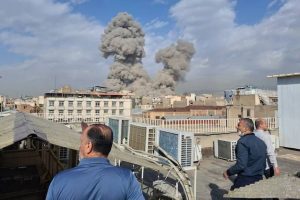
Khamenei did not perish alone. The Iranian Defence Minister, the Commander of the Islamic Revolutionary Guard Corps, and Ali Shamkhani, Secretary of the Supreme National Security Council and one of the Supreme Leader’s most trusted counsellors, were likewise killed. American intelligence officials, citing sources who requested anonymity, indicated that some forty senior Iranian functionaries perished across three simultaneous gatherings that had been identified and targeted with painstaking precision over the course of months of surveillance and planning.
President Donald Trump, monitoring operations from the White House, announced the death of the Supreme Leader via his Truth Social platform in characteristically unrestrained terms, describing Khamenei as “one of the most evil people in History” and declaring that justice had been served not only for Americans but for peoples across the globe who had suffered at the hands of the Islamic Republic. He urged the Iranian Revolutionary Guard Corps to lay down its arms, offering immunity to those who surrendered and promising annihilation to those who did not. He further addressed the Iranian citizenry directly, declaring that their hour of freedom was at hand and exhorting them to reclaim their government once the strikes had concluded.
Israeli Defence Minister Israel Katz was no less categorical in his triumphalism. “Whoever acted to destroy Israel was destroyed,” he declared. “Justice has been served, and the axis of evil has suffered a crushing blow.”
A Nation Bleeds and Burns
The human cost of the assault was staggering and in several respects devastating to the moral authority of the coalition that launched it. The Iranian Red Crescent Society reported that more than two hundred civilians had been killed across the country within the first hours of the bombardment, with upwards of seven hundred wounded. Communications across Tehran were severed almost immediately, and the independent internet monitoring organisation NetBlocks recorded that national connectivity in Iran collapsed to a mere four per cent of normal levels, plunging the population into a near-total informational blackout at the very moment they most urgently required it.
Most grievous among the civilian losses was the destruction of a girls’ primary school in southern Iran, struck during the initial wave of bombardment. Local prosecutors confirmed that one hundred and forty-eight children perished, and that further victims remained buried beneath the rubble. The incident provoked international outrage and cast a long, troubling shadow over the triumphant declarations emanating from Washington and Jerusalem.
Within Iran itself, the public reaction was remarkably, perhaps historically, divided. In certain quarters of Tehran and other cities, citizens who had long chafed under clerical despotism emerged into the streets to celebrate Khamenei’s death, filming their elation on mobile telephones before communications were cut entirely. In other parts of the capital, pro-regime mourners gathered in their thousands, weeping and beating their chests in the traditional Shia expressions of lamentation and grief. The Iranian government declared forty days of national mourning. President Masoud Pezeshkian declared the Supreme Leader a martyr and vowed with unambiguous conviction that vengeance would be exacted upon those who had authorised and executed the strikes.
The Region Ignites
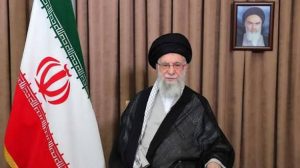
Tehran’s retaliation was swift, extensive and geographically ambitious. Ballistic missiles and drones rained upon Israel, killing at least nine civilians in the town of Beit Shemesh. Simultaneously, Iranian forces launched strikes at United States military installations across the Arabian Gulf, targeting bases in the United Arab Emirates, Qatar, Kuwait, Bahrain and Jordan. Three American soldiers were confirmed killed in action, with five others critically wounded, according to a statement from United States Central Command. The glamorous metropolis of Dubai, hitherto a sanctuary of mercantile tranquillity, sustained damage as Iranian missiles fell upon the Palm Jumeirah, one of the emirate’s most iconic and heavily populated districts.
The Islamic Revolutionary Guard Corps threatened what it termed the most intense offensive operation in the history of the Iranian armed forces. China’s Foreign Minister Wang Yi denounced the assault as unacceptable, condemning what he described as the blatant killing of a sovereign leader and the deliberate incitement of regime change. In Karachi, Pakistan, nine protesters were killed when demonstrators stormed the American consulate in protest at Washington’s military conduct.
The Iranian Foreign Minister, Abbas Araghchi, in an exclusive interview with an American broadcaster, indicated that Tehran remained willing to engage in negotiations, provided that the United States and Israel halted their campaign. He dismissed President Trump’s aspiration for regime change as, in his precise formulation, “mission impossible.”
An Uncertain Reckoning
The Middle East, already volatile beyond measure, now teeters upon an abyss of incalculable consequence. Whether the fall of Khamenei presages liberation or prolonged conflagration remains the defining and terrifying question of the age.