


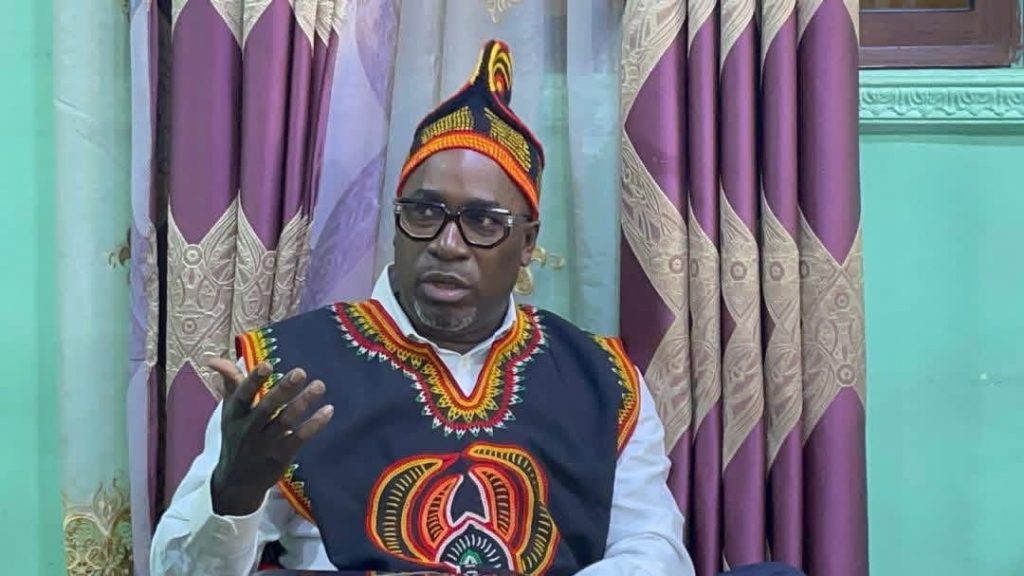
𝘗𝘦𝘢𝘤𝘦, 𝘫𝘶𝘴𝘵𝘪𝘤𝘦, 𝘢𝘯𝘥 𝘳𝘦𝘤𝘰𝘯𝘤𝘪𝘭𝘪𝘢𝘵𝘪𝘰𝘯 𝘳𝘦𝘲𝘶𝘪𝘳𝘦 𝘤𝘰𝘶𝘳𝘢𝘨𝘦 𝘢𝘯𝘥 𝘩𝘶𝘮𝘢𝘯𝘪𝘵𝘺.
The continued detention of political detainees connected to the Anglophone crisis remains one of the most profound obstacles to peace, reconciliation, and national healing in Cameroon.
Years into a conflict that has already cost thousands of lives, displaced entire communities, and weakened the social fabric of the nation, the persistence of prolonged detentions sends a troubling signal: that dialogue is secondary to repression, and justice subordinate to expediency.
Political Detention Is Not a Security Solution
Many individuals arrested in the context of the Anglophone crisis were detained not for violent acts, but for expressing dissent, participating in protests, engaging in advocacy, or being perceived rightly or wrongly as sympathetic to separatist narratives. Some have been held for years without trial, others tried before military tribunals for acts that are essentially civilian or political in nature.
This approach does not enhance security. On the contrary, it deepens grievances, fuels mistrust, and entrenches the very divisions that the State claims to be addressing. No society can imprison its way out of a political crisis.
Detention Without Justice Undermines the Rule of Law
The rule of law demands that deprivation of liberty be lawful, necessary, proportionate, and subject to judicial oversight. Yet many political detainees remain incarcerated in conditions that raise serious concerns: prolonged pre-trial detention, limited access to lawyers, trials before exceptional jurisdictions, and sentences that appear punitive rather than corrective.
Such practices are inconsistent with Cameroon’s constitutional guarantees and its obligations under regional and international human-rights instruments, including the African Charter on Human and Peoples’ Rights and the International Covenant on Civil and Political Rights.
Releasing Detainees Is a Confidence-Building Measure
The release of political detainees especially those linked to the Anglophone crisis would not be an act of weakness. It would be an act of leadership.
Confidence-building measures are essential in any peace process. Releasing detainees would send a powerful message to affected communities that the State is genuinely committed to dialogue, reconciliation, and a political, not purely military solution to the crisis.
History teaches us that durable peace is achieved not when voices are silenced, but when grievances are acknowledged and addressed through inclusive dialogue.
Justice Must Heal, Not Harden Divisions
As a human rights advocate and as someone who spent nine months in detention at Kondengui Principal Prison, I know what deprivation of liberty truly means. I understand the harshness of incarceration, the uncertainty of prolonged detention, and the psychological toll it takes not only on detainees but also on their families. This lived experience fuels no resentment; rather, it reinforces a simple truth: detention should never be used as a substitute for political dialogue or as a tool for managing dissent.
Justice should be a tool for healing, accountability, and restoration and not a mechanism for collective punishment or political intimidation. Holding political detainees indefinitely, or using detention as leverage, only hardens positions and prolongs suffering.
Families are torn apart. Communities remain traumatized. Trust in institutions continues to erode.
A nation cannot move forward while a significant segment of its population feels criminalized for expressing political or identity based grievances.
A Necessary Step Toward National Reconciliation
The Government of Cameroon should take immediate and concrete steps to review the cases of all political detainees linked to the Anglophone crisis, with a view to their release where no credible security threat exists.
This process must be transparent, strictly guided by the law, and accompanied by a clear political commitment to dialogue and reconciliation. Independent judicial oversight, guaranteed access to legal counsel, and full respect for due process must be ensured.
The release of political detainees is not an end in itself. It is a necessary starting point for rebuilding trust, reducing tensions, and opening a credible pathway toward sustainable peace.
Peace cannot be built behind prison walls. It can only emerge from justice, dialogue, and the recognition of our shared humanity.
Nkongho Felix Agbor (“Agbor Balla”)
Barrister-at-Law & Human Rights Advocate
President, Centre for Human Rights and Democracy in Africa (CHRDA)

