


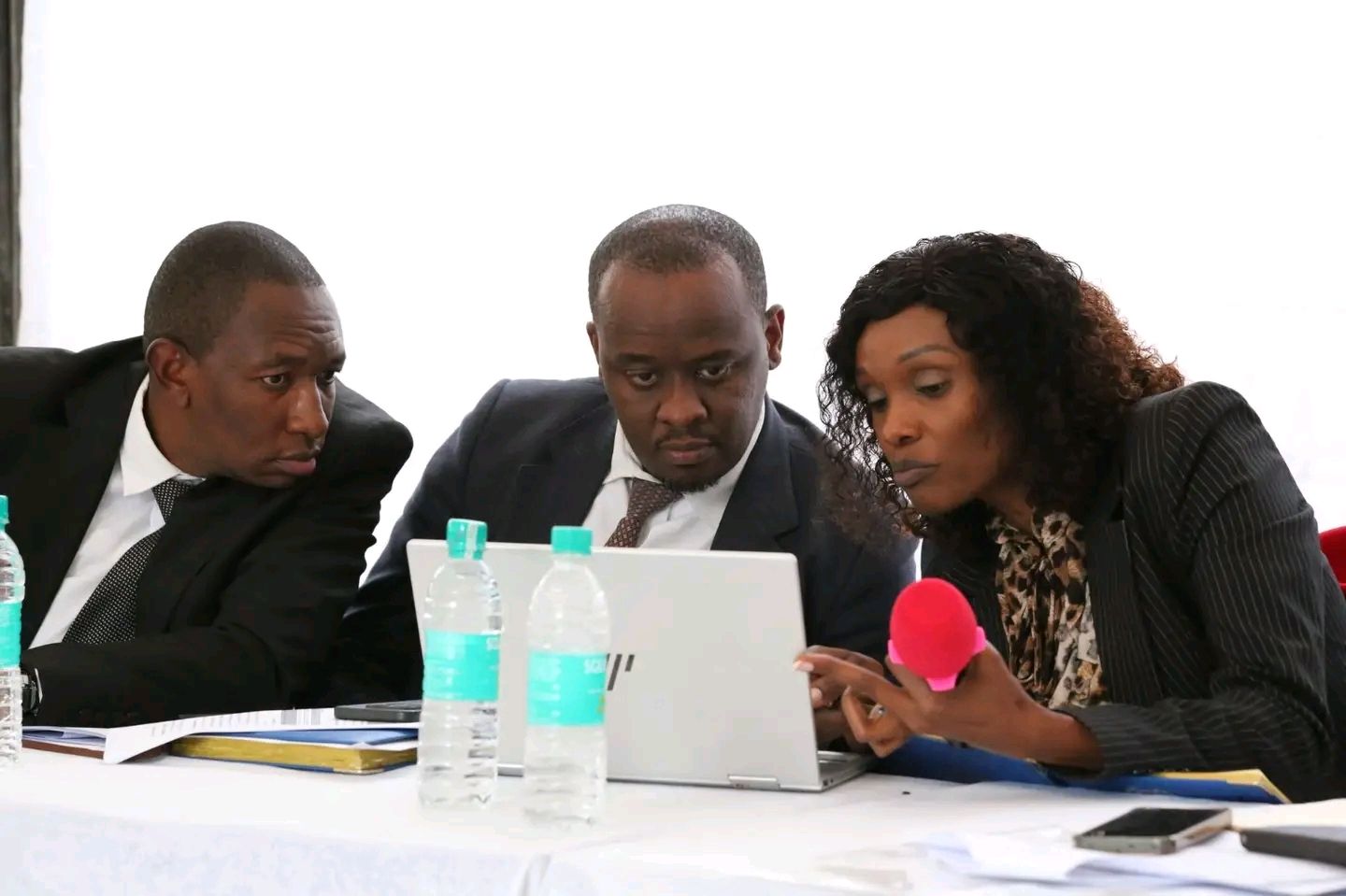
Kiambu County’s Budget and Appropriations Committee has finished a two-day scrutiny of the 2026/27 budget submissions and is preparing a final report to present to the full Assembly for approval.
Sectoral committee chairs and county executive officials attended the hearings to explain and defend their department budget proposals before the BAC.
Members of the Assembly probed departmental allocations closely, concentrating on infrastructure, education, revenue forecasts and projects at ward level.
Majority Leader Godfrey Mucheke, representing Kalimoni Ward, chaired the sessions on behalf of BAC chair Josephine Nduta of Limuru Central.
Roads, public works and infrastructure drew attention, with MCAs insisting on sufficient funding to repair and maintain access roads across all 60 wards.
“Our constituents expect better road links that improve access and boost local commerce; funding for access roads must be prioritized,” Mucheke said.
Education and youth empowerment also featured s, with members demanding faster roll-out of projects and stronger accountability to ensure funds deliver results.
Debate also addressed the county’s own-source revenue target of over Sh9.9 billion, with several MCAs questioning its realism because it exceeds the Sh8.8 billion estimate in the County Fiscal Strategy Paper.
Finance and budget officials, led by Chief Officer Zachary Gitau and County Director of Budget Nduta Kahia, told the committee the county has received an extra Sh269 million under CARA.
Gitau said Sh92 million of the additional funds will go to the County Assembly while Sh177 million is earmarked for development projects after adjustments.
MCAs including Chief Whip Nelson Munga (Ndeiya), Edward Kinyanjui (Nyathuna), Cedric Gachunga (Ikinu), Julias Kahura (Kiganjo), Christopher Ireri (Bibirioni), Josphat Kinyanjui (Lari/Kirenga), Sheila Wangui and nominated MCA Josephine Wangui raised concerns about the Ward Development Fund, road funding, allocations for persons with disabilities and support for small traders.
Responding, finance officials said the Ward Development Fund will be given priority and that the Enterprise Fund has been widened beyond boda-boda riders to include market traders, tuk-tuk operators, matatu businesses and other entrepreneurs registered in SACCOs.
“The county government remains focused on empowering traders and youth through targeted financing,” Gitau said, adding discussions on more funding for access roads and people with disabilities will continue.
Mucheke also reminded the County Executive to factor in the County Assembly’s new financial autonomy under the County Public Finance Laws (Amendment) Act, signed by President William Ruto and taking effect July 1, 2026.
Under the new law, the Assembly will receive funds directly from the National Treasury via the County Assembly Fund, with the Clerk acting as the independent accounting officer, a move Mucheke said should improve accountability.
The BAC said it will fold in feedback gathered during countywide public participation held two weeks earlier when drafting its final recommendations and before presenting the budget estimates and Appropriations Bill to the Assembly.
Why this matters for child safety across Africa
Local road quality and properly funded school and youth programmes are critical to protecting children—poor access roads increase risks during commutes, slow emergency response and limit access to health and education. Counties and states across Africa implementing similar budget scrutiny and channeling resources to feeder roads, school projects and targeted youth funds can reduce accidents, improve emergency access and make communities safer for children.
A simple takeaway for African subnational governments: rigorous budget review that prioritizes access roads, education delivery and targeted local funds — paired with realistic revenue forecasting and transparent financial autonomy — is a practical route to safer environments for children.


