


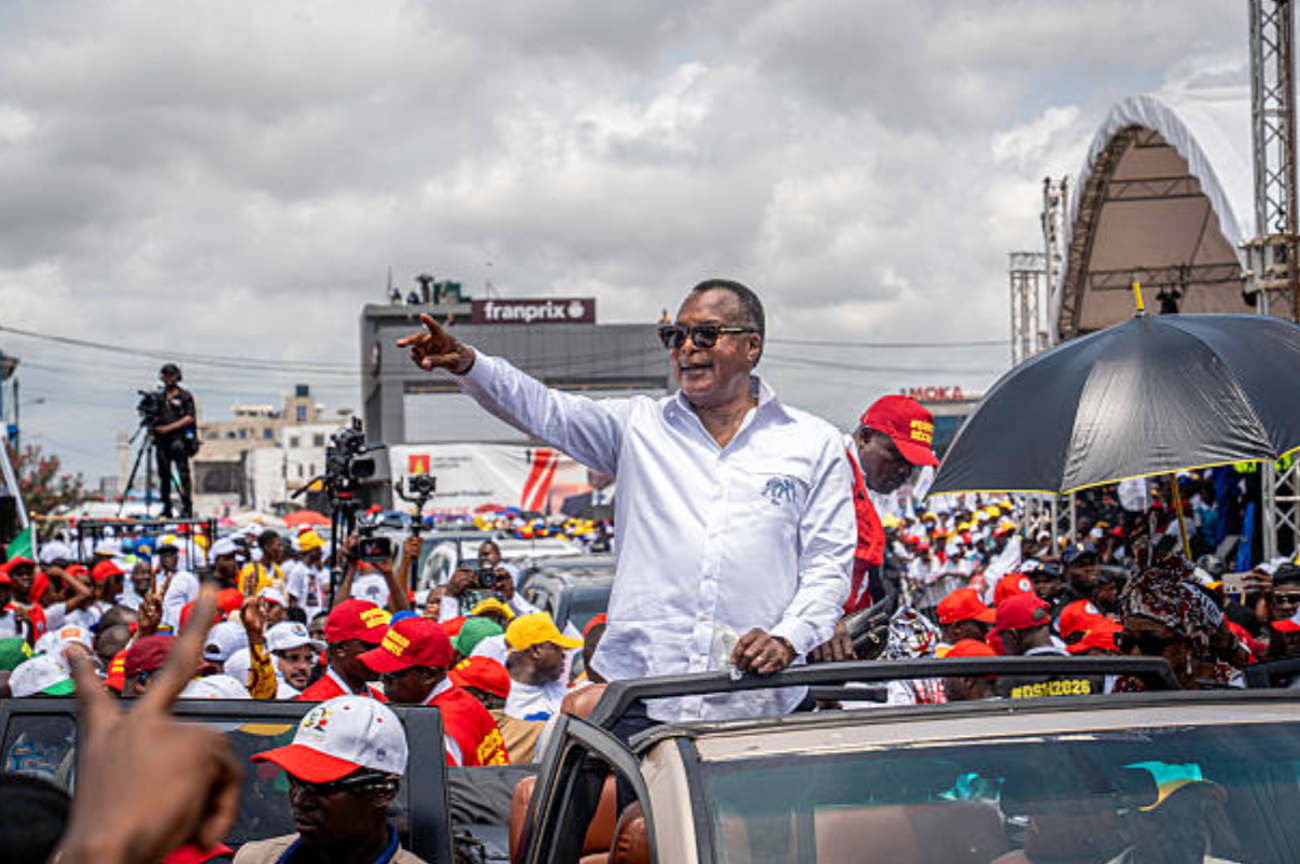
Voters in the Republic of Congo headed to the polls on Sunday to choose a president, with long-serving leader Denis Sassou Nguesso seeking another mandate that could extend his decades-long dominance in the oil-rich Central African nation.
Around three million registered voters are expected to participate in the election, although analysts predict turnout could be unusually low. At 82 years old, Sassou Nguesso is widely regarded as the frontrunner and is seeking what would effectively be a fifth consecutive term in office.
Although six challengers are officially contesting the race, the opposition landscape remains fragmented. Several prominent opposition groups have boycotted the election, arguing that the voting process lacks fairness and transparency.
Furthermore, the country’s most recognizable opposition figures are either imprisoned or living abroad. Former presidential candidates Jean‑Marie Michel Mokoko and André Okombi Salissa are currently serving 20-year prison sentences after authorities accused them of threatening national security.
During the campaign period, which concluded on Friday, Sassou Nguesso travelled across the country appealing to citizens to participate in the vote. Backed by the ruling Congolese Workers’ Party, he emphasized stability and national security as key achievements of his leadership.
At his final rally in the capital, Brazzaville, thousands of supporters gathered to hear the president highlight his administration’s development efforts. He pointed to projects aimed at upgrading infrastructure and diversifying the economy, particularly by expanding the gas and agricultural sectors.
Despite these initiatives, critics argue that economic progress has not benefited the majority of citizens. Although the country’s economy—driven largely by oil and gas—could grow by about 2.9 percent in 2025, more than half of the population still lives below the poverty threshold.
Opponents also accuse government officials of mismanaging or diverting oil revenues, allegations that have triggered several legal complaints and investigations abroad, including cases examined in France.
Meanwhile, Sassou Nguesso’s continued rule has sparked debate about the country’s political future. While the current constitution bars him from seeking another term in 2031, the question of who might eventually succeed him remains unresolved.
The president has acknowledged that leadership should eventually pass to a younger generation, though he has not identified any specific potential successor.
Sassou Nguesso first came to power in 1979 during a one-party era before losing the country’s first multiparty election in 1992. However, he returned to power in 1997 following a civil war and has since secured victories in elections held in 2002, 2009, 2016 and 2021—polls that opposition groups have repeatedly criticized.
The nation, officially known as Republic of the Congo, gained independence from France in 1960 and has maintained close diplomatic ties with both France and Russia. It remains the third-largest oil producer in sub-Saharan Africa, with hydrocarbons generating more than three-quarters of export revenues.
Voting stations opened at 7:00 a.m. local time and are scheduled to close at 6:00 p.m., with a possible second round of voting expected within three weeks if no candidate secures an outright majority.


