


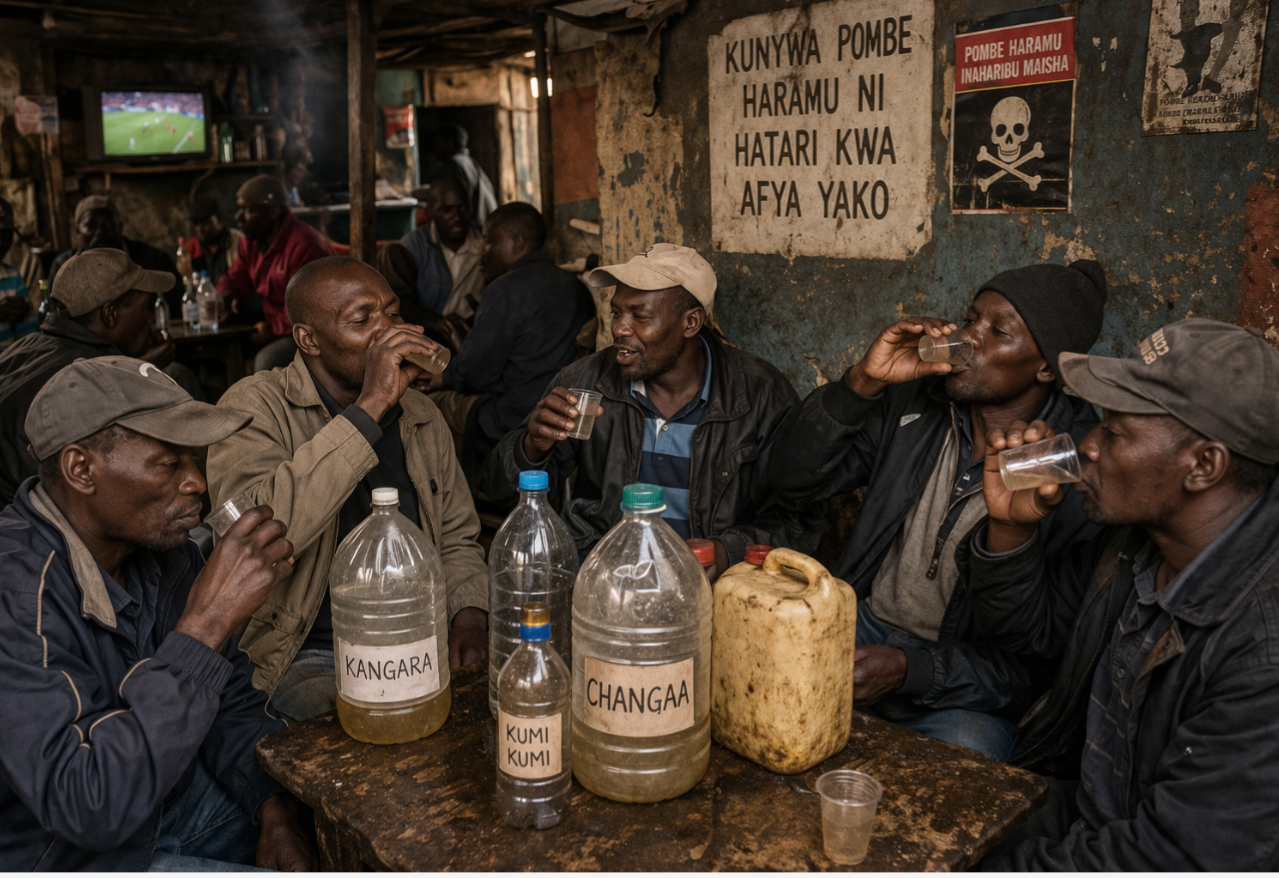
Kenya is losing an estimated Sh71 billion each year due to the widespread production, smuggling, and sale of illegal alcohol, authorities have revealed.
The Anti-Counterfeit Authority (ACA) says findings from a 2023 study by Euromonitor International show that counterfeit alcohol accounted for 21 per cent of the market’s value in 2022, while illicit brews made up nearly 59 per cent of total volume consumed. This highlights the scale of a shadow economy undermining both revenue collection and consumer safety.
ACA Chief Executive Officer Robi King’a told lawmakers that well-established smuggling corridors exist along Kenya’s borders with Tanzania, Uganda, and Ethiopia. Traffickers reportedly conceal large drums and smaller containers in legitimate cargo, transport them on motorcycles, and use informal “panya routes” to evade detection.
The agency identifies four major forms of illegal alcohol trade. These include counterfeit and fake-branded drinks, smuggled products entering without duty payments, tax-leak alcohol from licensed producers avoiding excise obligations, and highly dangerous artisanal brews. The latter, often produced in unregulated environments, is the most prevalent and accounts for about 66 per cent of illicit alcohol consumed.
Officials warn that many of these locally produced drinks are contaminated with harmful substances such as methanol, formalin, and pesticide residues, posing serious health risks and frequently causing fatalities. Past incidents in areas like Kibwezi, Kakamega, and Kiambu have demonstrated the deadly consequences of consuming such products.
Further concerns include the diversion of industrial ethanol into illegal distillation chains and the growing role of corrupt retail practices, where genuine bottles are refilled with substandard liquor. The rise of online platforms, including social media and messaging apps, has also made monitoring and enforcement more difficult.
According to ACA, alcoholic beverages remain one of the most counterfeited product categories in the country, with gin and vodka most affected at production level, while consumers report high levels of fake wine, beer, whiskey, and vodka in the market.
To combat the crisis, the agency is proposing stricter surveillance measures, including the use of body-worn cameras by enforcement officers and the creation of intelligence units at key border points. It also advocates for improved data integration between institutions such as the Kenya Revenue Authority, KEBS, and other regulatory bodies to strengthen tracking and compliance systems.

