


As felicitations pour in for the New Year‚ the Guardian of the National Purse‚ Moh Sylvester Tangongho‚ newly decorated Grand Officer, architect of Cameroon’s fiscal renaissance, and the most consequential technocrat in Central African public finance‚ is indefatigably committed to steer the republic’s most ambitious budget in history.
By Nkemngu Martin
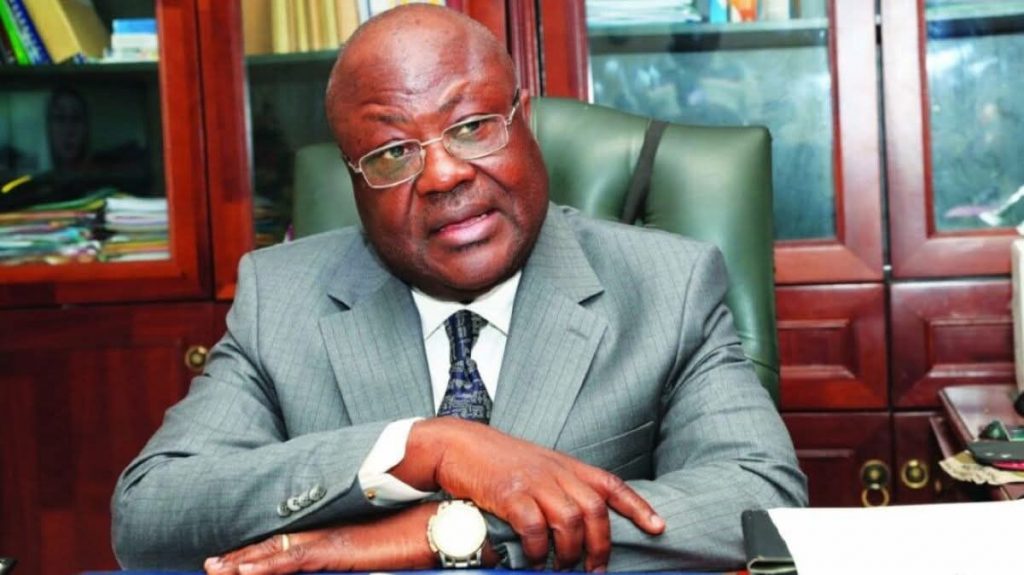
Cameroon Treasury Director General‚ Moh Sylvester
The Concorde International Hotel in the heart of Yaoundé has, in its brief existence, already acquired a peculiar distinction: it is at once the finest address in the capital and a monument to institutional self-belief. Funded and realised by the personnel and mutual association of the Directorate General of the Treasury, Financial and Monetary Cooperation‚ the very body charged with guarding the national coffers‚ the hotel stands as tangible proof that under the stewardship of Moh Sylvester Tangongho, the treasury transcends preserving wealth; it generates it.
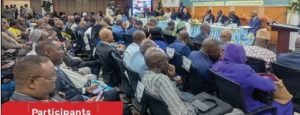
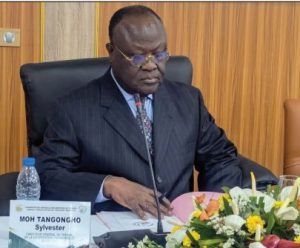
It was within these very walls, on the morning of Monday, February 9‚ 2026, that Cameroon’s most important gathering of fiscal minds convened under the theme of “Modernising management tools for an efficient public treasury.” The Annual Concertation of Treasury Services brought together an assembly of Technical Advisers, Directors, the Accountant-General and the Paymaster General, Paymasters from Diplomatic and Consular Offices, Treasurers-Paymasters General, Specialised Paymasters, Accounting Officers, and Public Accountants from Regional and Local Authorities. It was a full congregation of the republic’s financial architecture and at its apex, presiding with the quiet authority of the thoroughly prepared, sat Moh Sylvester in person.
Three days prior, at the Annual Conference of Ministry of Finance officials chaired by the Minister‚ Louis Paul Motaze, something of note had occurred. The Director General had been conferred the rank of Grand Officer of the National Order of Valour‚ one of Cameroon’s highest distinctions, reserved for those who have demonstrated conspicuous steadfastness and diligence in service to the state. It was an honour that reverberated through the treasury’s halls with the force of institutional vindication, and it set the moral register for the concertation that followed.
“A healthy Treasury is the very breathing of state action‚” Moh Sylvester Tangongho
New Year, New Resolve: Wishes to the Treasurer General
As the republic crossed the threshold into 2026, messages of congratulation and New Year felicitation for Moh Sylvester arrived from every quarter of the nation’s financial community‚ to wit: from governors and regional paymasters, from diplomatic posts and multilateral partners, from civil servants whose salaries have arrived with clockwork regularity throughout a decade of compound adversity. The sentiments were neither perfunctory nor ceremonial. They were the expression of a community that understands, with a sobriety born of lived experience, that the continuity and integrity of the public treasury are not givens but achievements.
Colleagues and observers spoke of a man who has guided the institution through the Anglophone crisis, Boko Haram incursions in the Far North, the catastrophic revenue collapse wrought by the COVID-19 pandemic, and successive oil price shocks‚ and yet has consistently honoured the payment of civil servants’ salaries and internal and external debts without interruption. In a subregion plagued by fiscal fragility, this record borders on the extraordinary. Well-wishers expressed the hope that 2026 would bring Moh Sylvester continued professional distinction and the personal satisfaction of seeing the digital and structural reforms he has so painstakingly assembled‚ reach their full operational maturity.

CEMAC’s community of central bankers and finance ministers has, both publicly and privately, expressed admiration for the singular fact that Cameroon remains the only member state of the Central African Economic and Monetary Community whose account at the Bank of Central African States remains in credit. In a community where fiscal distress has become almost conventional, that distinction is the product of no accident. It is the product of Cameroon’s purse keeper.
The Architecture of Reform: Tangongho and the 2026 Finance Law
One cannot appreciate the significance of Moh Sylvester’s stewardship without first grasping the scale of the undertaking before him. The 2026 Finance Law has endowed Cameroon with its most ambitious budget in the republic’s independent history‚ a record FCFA 8,816.4 billion‚ with deficit financing requirements exceeding FCFA 3,100 billion. The legislation mandates, among its most transformative provisions, the real-time electronic invoicing of transactions, comprehensive digital reporting by firms operating in the digital economy, and the tightening of deductible expense rules to curtail abusive corporate accounting arrangements.
These are not abstract legislative aspirations. They are, in the estimation of close observers, the formal codification of a transformation that Moh Sylvester has been engineering from within the treasury for the better part of a decade. The legislation has, in a very real sense, arrived at a juncture where much of the requisite infrastructure already exists‚ because he built it.
The Digital Imperative: TrésorPay and the New Platform
Where the 2026 Finance Law mandates electronic invoicing and real-time digital reporting, Moh had already constructed the institutional scaffolding. He personally presided over the launch of a redesigned digital platform and the TrésorPay application, offering civil servants, financial partners, investors, and the general public direct online access to treasury services, commitment verification, and capital market data. The platform represents the definitive replacement of opacity with transparency‚ a single digital interface where, not long ago, correspondence and manual verification reigned supreme.
At the February concertation, the Director General issued an unambiguous directive to the Department of Public Accounting: the full and uncompromising implementation of TrésorPay across all relevant government channels is a non-negotiable priority for 2026. Regional and Local Authorities, hitherto reliant on conventional accounting practices, are to transition without delay towards asset-based accounting. The alignment of treasury plans with actual budget expenditures‚ a structural reform of the highest order‚ is expected to reduce payment deadlines and restore liquidity to small businesses and contractors whose cash flows have long been hostage to bureaucratic procrastination.
“Guided by discipline, driven by professionalism, and carried by innovation‚ the Cameroonian Public Treasury shall become a reference of excellence for all of Central Africa.”
Eliminating Phantoms: The SYSTAC Legacy
It is now part of the institutional folklore of the DGTCFM that when SYSTAC‚ the Central African salaries and pensions payment system‚ came into operation in August 2019, the treasury saved FCFA 200 million in its very first month alone. The system had, with mechanical impartiality, identified 1,524 phantom or erroneous transfers, including payments issued to deceased civil servants whose names had lingered, with conspicuous profitability for some, on the payroll long after their passing. The Director General announced at the time that, annualised, this represented a saving to the state of FCFA 2.4 billion per annum.
This is precisely the spirit animating the 2026 Finance Law’s tightened rules on deductible expenses and its sustained offensive against fraudulent accounting arrangements. SYSTAC was not merely a software deployment; it was a philosophical declaration that the state’s resources belong to the state, and that those who seek to divert them through negligence or malfeasance will find that technology is a more reliable guardian than any number of manual auditors. The Treasury Audit department, per Moh’s 2026 directives, is to pursue this philosophy further still: the modernisation of internal controls and an intensification of audits to address and rectify existing deficits are central to the year’s agenda.
The Capital Markets Frontier and the Grey List Challenge
Since 2010, Tangongho has championed the issuance of public securities, assiduously diversifying state financing beyond the traditional revenue streams of Taxation and Customs. The cultivation of domestic and regional capital markets has, over that intervening period, unlocked resources for infrastructure and public investment that conventional fiscal streams could never have financed. With the 2026 budget’s borrowing requirements reaching unprecedented levels, his decade-long investment in these markets has become not merely prudent but indispensable to the republic’s fiscal arithmetic.
In a concurrent effort of institutional hygiene, the department responsible for Financial and Monetary Cooperation has been issued a categorical instruction: Cameroon is to be removed from the international grey list that pertains to the oversight of financial flows. The DGTCFM is to pursue innovative financing methods‚ Islamic finance instruments and climate-focused investment vehicles among them‚ as vehicles of diversification and as demonstrations to the international community that Cameroon’s financial governance meets the highest standards of probity and transparency. It is an ambition that sits comfortably within the broader framework of the 2026 Finance Law’s push for fiscal modernity.
Solving the December Scramble: A Systemic Correction
The Annual Concertation of February 2026 drew pointed attention to a systemic dysfunction that has bedevilled Cameroonian public finance for years: the so-called ‘December scramble’, in which approximately forty per cent of all financial engagements are compressed into the final weeks of the fiscal year. The result is a bottleneck of monumental proportions, placing the treasury under insupportable pressure and generating the very payment delays that erode confidence among contractors and private sector partners.
Tangongho’s proposed remedy is as logical as it is overdue: the establishment of a robust information system capable of automatically carrying over payment credits, thereby distributing disbursements equitably across the fiscal calendar and forestalling the frantic, last-quarter accumulation that has for too long been treated as an immutable feature of government finance rather than the correctable structural defect that it is. Adding material substance to this ambition, it was confirmed at the concertation that the 2026 Budget has made provision of four hundred billion FCFA specifically to settle rollover debts‚ a commitment that provides a significant buffer for the stabilisation of payments and the restoration of confidence among the state’s financial partners.
A Veteran of the Long Game
To understand the full measure of Sylvester Moh’s authority, one must trace a trajectory that begins in Ngoketunjia Division in the North West Region, where he was born in 1963. He obtained his diploma from the National School of Administration and Magistracy in 1989, and over the following quarter-century accumulated an unrivalled mastery of the intricacies of public accounting, rising to the rank of Principal Inspector of the Treasury. His appointment as Director General of the DGTCFM on 14 June 2013 marked the formal culmination of that journey‚ though not, emphatically, its terminus.
He was among the technicians who guided Cameroon through the pivotal IMF and World Bank negotiations that secured the country’s attainment of the Heavily Indebted Poor Countries completion point in 2006‚ a milestone that opened the door to significant debt relief and redefined the republic’s fiscal trajectory. As recently as January 2026, he has been engaged in high-level exchanges with experts from the United States Department of the Treasury, exchanges that underline both his international standing and his restless pursuit of institutional improvement. The world, for Tangongho, remains a classroom.
Meritocracy and the Moral Compact
Amidst the technical deliberations at the Concorde International Hotel, the 2026 concertation provided an occasion for something rarer in bureaucratic culture: institutional gratitude and the public celebration of professional merit. Mirroring the high-profile decoration of their Director General three days prior, a cohort of dedicated treasury staff members were awarded certificates of excellence in acknowledgement of their performance. The gesture was deliberate and its symbolism unmistakeable‚ that the vitality of the treasury does not reside in software and systems alone, but in a motivated, upright, and principled workforce.
In his closing address, the newly decorated Grand Officer spoke to his assembled officers with a combination of professional rigour and paternal encouragement that those present described as characteristic. He exhorted all treasury personnel to demonstrate probity, to respect public property, and to carry themselves as custodians of the public interest in its most literal sense. In an era of global economic uncertainty, resource scarcity, and fiscal fragility, he reminded them, digital innovation and personal integrity are the only currencies that do not devalue.
As the delegates departed into the Yaoundé evening, the message of the 2026 Annual Concertation lingered in the air with the authority of things sincerely meant: under the direction of this unassuming but formidably accomplished technocrat, the Cameroonian Public Treasury is positioning itself as a transparent, efficient, and modern engine of national development. The new year’s good wishes that have arrived from every corner of the republic’s financial community are not mere courtesy. They are the recognition, however sotto voce in the tradition of high-function institutions, that in Moh Sylvester Tangongho, Cameroon possesses something exceedingly rare: a public servant who is, genuinely and verifiably, equal to his charge.

