


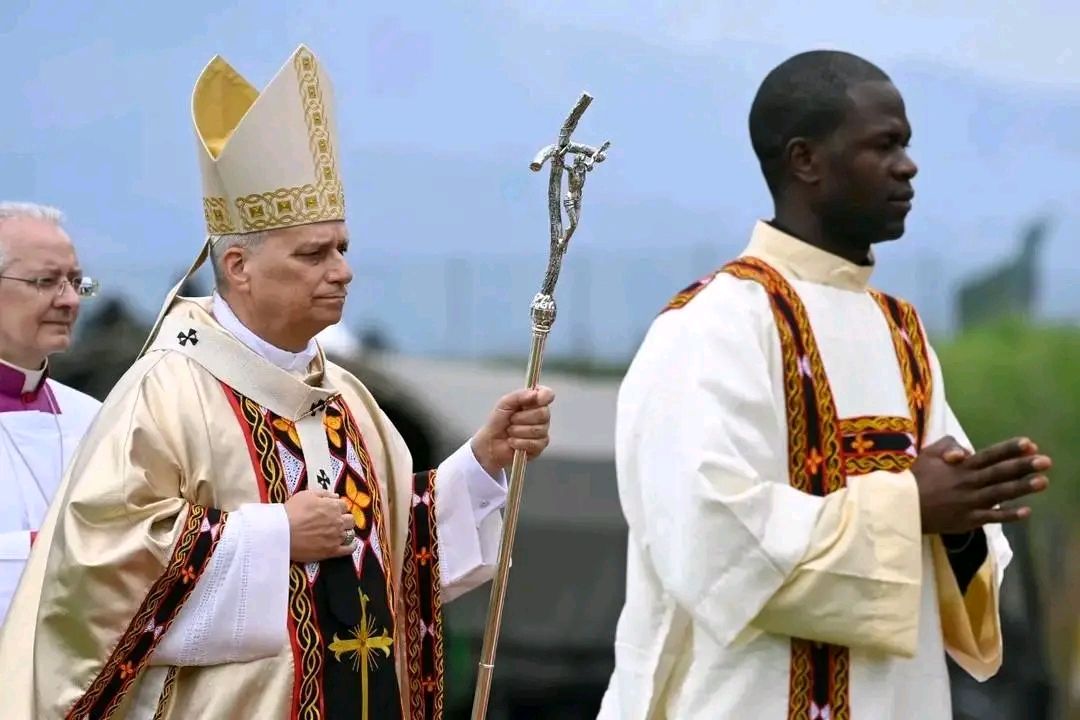
The Pope has completed day four of his 11-day Apostolic journey to Africa, and today he visited Bamenda, where his presence brought together faith and culture. His visit to one of the conflict affected areas in Cameroon was that of renewed peace and unity .
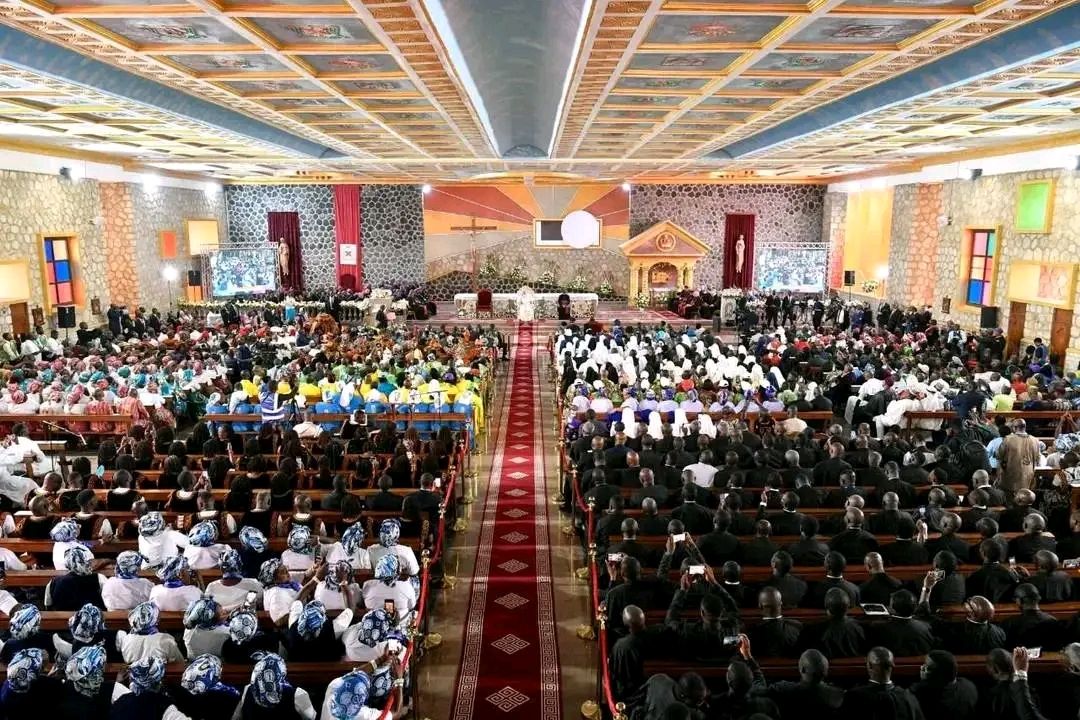
The holy Father’s visit combined Mass celebrations, cultural expression, and encounters with communities affected by years of insecurity.
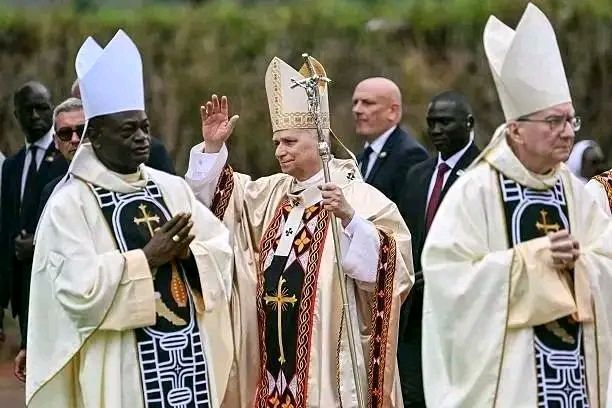
In terms of Tradition _Culture, Clergy and bishops wore vestments featuring the Toghu, the traditional embroidered attire of the Grassfields, highlighting a blend of local culture and Catholic tradition that was warmly received by the faithful.
In his welcome message to the Pope, the Archbishop of Bamenda, Archbishop Andrew Nkea addressed the Pope, speaking about eight years of suffering in the region. He said civilians continue to endure the consequences of a conflict they did not cause, pointing to displacement, economic hardship, and prolonged school closures.
He also highlighted the situation of religious personnel, noting that priests and Church workers have faced intimidation, abduction, and killings while continuing their ministry.
To show that the Pope did not only come for Catholics, The Presbyterian Church in Cameroon (PCC), led by its Moderator Rt. Rev. Miki Hans Abia, also joined other Church leaders in a peace-focused meeting with the Pope at St. Joseph’s Cathedral in Bamenda.
The delegation was also expected to participate in a Pontifical Mass at the Bamenda (Bafut) International Airport, symbolizing unity among Christian communities.
In the cause of his visit, Pope Leo XIV released white doves during the visit as a gesture for peace and non-violence, urging the faithful to become instruments of reconciliation.
At a peace encounter in the Cathedral, he met traditional rulers, Muslim leaders, religious sisters, and displaced families who shared experiences of suffering .
He acknowledged their pain while praising their endurance, describing Bamenda as a community that continues to remain strong despite hardship.

