


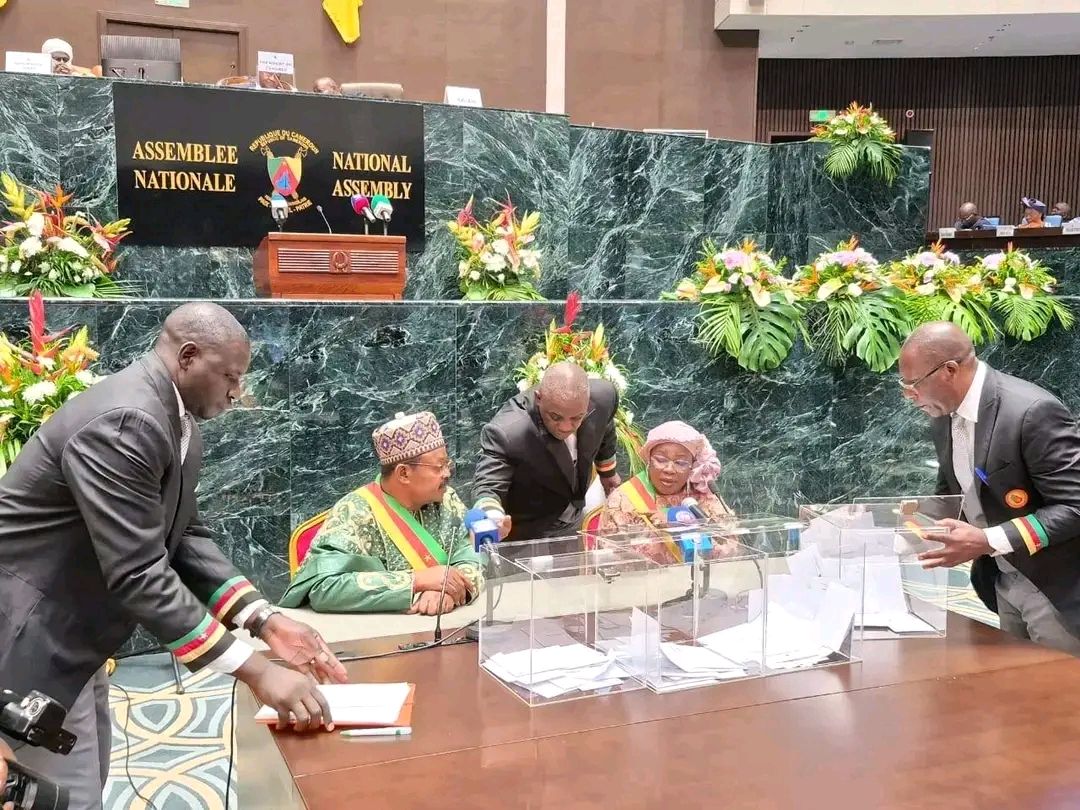
 The Parliament in Cameroon has approved a constitutional amendment reintroducing the post of Vice President, handing the Head of State authority to appoint a constitutional successor—an outcome that has raised political intrigue .
The decision was made in Capitol Hill in Yaoundé, where lawmakers endorsed the return of the vice presidency, a position scrapped in 1972 following the shift to a unitary state. The newly passed legislation empowers Paul Biya to designate a deputy who would automatically take over in the event of a vacancy at the helm of the state.
The bill sailed through with a majority of 200 votes in favor, 18 against, and 4 abstentions—confirms the appointment-based system rather than an electoral one. While the reform may appear routine on paper, it has quickly become a rod for debate.
Amid the chorus of approval, a lone voice_René Zé Nguélé openly questioned the pace and direction of the reform, warning that the process risks sidelining the will of the people.
Taking the floor, the veteran senator expressed deep unease, arguing that a constitutional overhaul conducted without broad public input undermines democratic principles. In his view, entrusting such significant authority to unelected figures blurs the line between democracy and centralized control.
His remarks stood out —particularly coming from the Senate, widely seen as more aligned with the executive. His intervention has added a new dimension to the unfolding political narrative.


